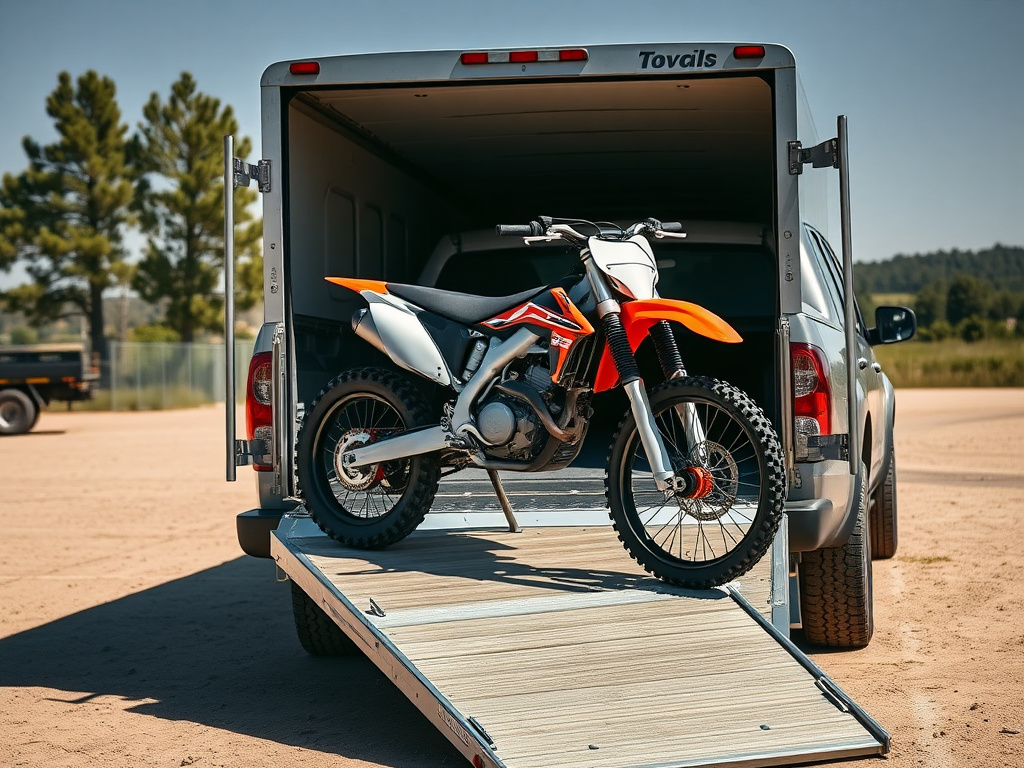
Trailer & Transport Coverage for Pit Bikes & Minibikes
Trailer and transport coverage protects your minibike or pit bike — and the trailer itself — while it's in transit to and from tracks, trails, and events. It's one of the most commonly missed gaps in a rider's overall coverage, because most people simply assume their tow vehicle's auto policy extends to whatever they're hauling. In most cases, it doesn't — auto policies are built around the vehicle itself, not the recreational cargo riding behind it.
What's Covered
- Coverage for the bike while loaded and in transit
- Protection for the trailer itself, including theft, damage, and collision
- Coverage designed to fill the gap most tow-vehicle auto policies leave open
- Applicability to both open and enclosed trailers
- Coverage for transport to and from tracks, trails, and events
- Options that can extend to multiple bikes hauled together
The Transit Gap Most Riders Don't Know About
A lot of riders never think about insurance during the drive to the track — they think about it once the bike is unloaded and being ridden. But a meaningful share of bike damage and theft actually happens in transit or at rest stops, parking lots, and staging areas along the way, not while anyone is actually on the trail.
If your bike is damaged in a highway incident, falls off an improperly secured trailer, or is stolen from a parking lot on the way to an event, the question of what actually covers that loss often catches riders off guard.
What Your Tow Vehicle's Auto Policy Usually Doesn't Cover
Auto insurance on your truck or SUV is written to cover that specific vehicle — not whatever recreational cargo you happen to be towing behind it. Most auto policies don't automatically extend physical damage or theft protection to an off-road minibike or pit bike loaded on a trailer, even though the trailer is legally attached to an insured vehicle. This is a gap, not an oversight on your part — it's simply outside the scope of what a standard auto policy is designed to insure.
It helps to think of your tow vehicle's auto policy as covering the truck, and in some cases the liability exposure of towing something behind it, but generally not the value of what's actually loaded on the trailer. If your bike shifts and is damaged during a hard stop, is stolen while the truck is parked at a gas station, or is damaged when another driver strikes the trailer, the auto policy's physical-damage coverage is written around the insured vehicle itself — not the pit bike riding along behind it. That's the specific gap trailer and transport coverage exists to close.
A Closer Look at What's Typically Excluded for Cargo
Even riders who've heard the general warning that “auto insurance doesn't cover the bike” are often surprised by how specific the gap is once they look closer. A tow vehicle's policy may respond if the truck itself is damaged in a collision, and depending on the policy, may extend some liability protection if the trailer causes damage to someone else's property while being towed. What it typically does not do is treat the bike strapped to that trailer as insured cargo with its own value — the same way a homeowners policy generally won't treat tools in the bed of a work truck as covered contents.
This distinction matters most in the moments riders don't think about: a bike that comes loose and is damaged on the highway, a trailer broken into overnight at a hotel parking lot during a multi-day event trip, or a bike scratched and dented when a strap fails during loading. None of those scenarios involve the tow vehicle itself being damaged, which is often exactly why a claim against the auto policy alone falls short.
Protecting the Trailer, Not Just the Bike
Trailer and transport coverage typically protects two separate assets: the bike being hauled, and the trailer itself. Trailers get stolen, damaged in collisions, and vandalized just like the bikes they carry, and a policy that only covers the bike leaves the trailer — which can be a significant expense on its own — unprotected.
Open vs. Enclosed Trailers
Whether you haul on an open utility trailer or a fully enclosed trailer changes your exposure — open trailers carry more risk from road debris, weather, and visible/accessible theft opportunities, while enclosed trailers reduce some of those risks but represent a larger asset themselves if damaged or stolen. Coverage can typically be structured around either setup.
Hauling Multiple Bikes
Families and clubs that haul more than one bike at a time — siblings riding different CC classes, or a group heading to the same event — often need coverage that scales across multiple bikes on a single trailer rather than insuring each bike's transit separately. This is worth flagging to your agent up front if it reflects how your household actually travels to ride.
Common Transit Risks: Theft, Collision, Road Debris
The most common losses in transit fall into a few predictable categories: theft from an unattended trailer, collision damage during towing (including from other drivers), and road debris or improper securing causing damage during the drive. Trailer and transport coverage is built to address these specific, well-understood risks rather than being a vague catch-all.
Long tow days to out-of-state events add their own wrinkle: more highway miles means more exposure to road debris and severe-weather damage, more overnight stops where a loaded trailer sits unattended in an unfamiliar parking lot, and more opportunities for a strap or tie-down to work loose over hours of driving. Families and clubs who regularly travel a long distance for races or track weekends carry meaningfully more transit exposure than someone hauling a bike ten minutes down the road, which is worth factoring into how much coverage makes sense.
Pairing Transport Coverage With Physical Damage Coverage
Transport coverage and physical damage and theft coverage work together to protect the bike across its full lifecycle — one covers it while being ridden and stored, the other covers it specifically during the drive to and from wherever you ride. Riders who tow regularly to tracks or trails typically want both in place rather than assuming one automatically covers the other.
Trailer & Transport — Common Questions
Ready for Trailer & Transport?
Get a fast, no-obligation quote built for your rider and your bike.