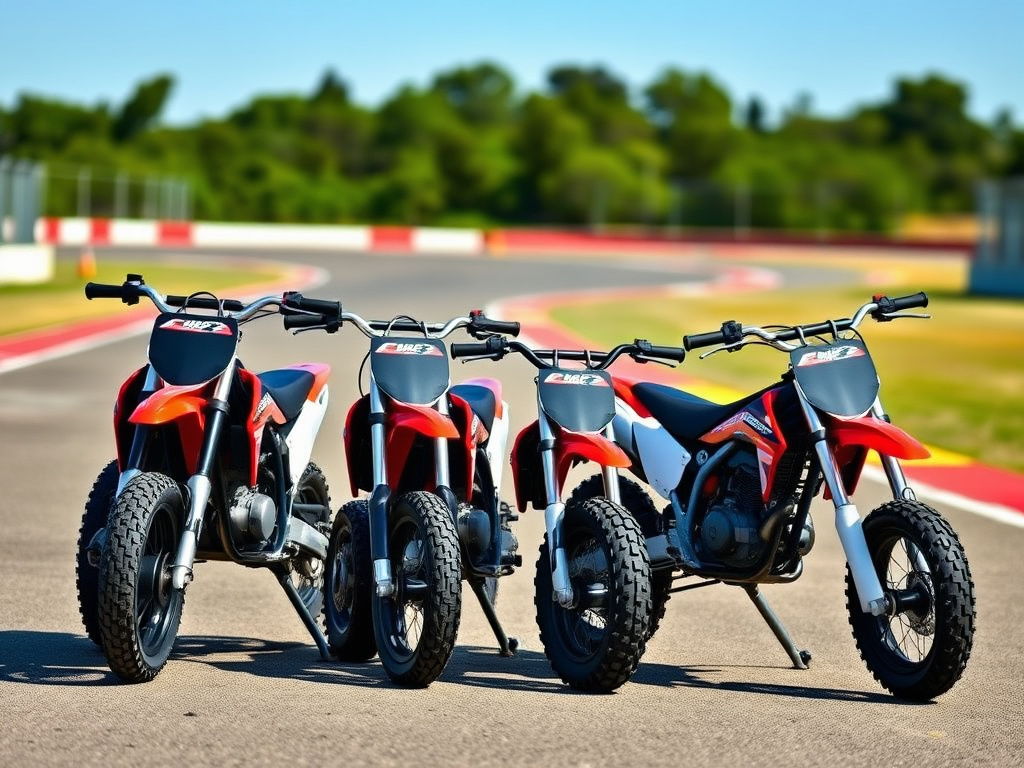
If you're shopping for your child's first minibike, or your teenager's first pit bike, the alphabet soup of engine sizes — 50cc, 70cc, 110cc, 125cc — can feel like it needs its own translation guide. Each class isn't just a different price point; it's tied to a rough age and skill progression, and it shapes how the bike should be thought about from an insurance standpoint too.
This guide walks through each class, who it's typically built for, and how engine size fits into the broader coverage conversation.
Why CC Class Matters Beyond Just "How Fast Is It"
Engine displacement (CC, or cubic centimeters) is the standard shorthand the powersports industry uses to describe how much power a small-displacement bike puts out — and by extension, how much bike a rider can safely handle. Manufacturers design and market these classes with a rider's age, size, and experience level in mind, which is exactly why age-to-CC-class charts are one of the most common things parents search for before a first purchase.
That same age/experience mapping matters for insurance too. A bike's engine class, the age and experience of the person riding it, and where it's primarily ridden are all factors that inform how a policy gets structured. None of these factors work in isolation — a 50cc bike ridden by a very young, closely supervised rider on private property is a different picture than the same size bike being used more aggressively on a trail, and a 125cc pit bike being raced at a sanctioned event is a different picture still. Being accurate about the real class of bike and the real rider when you talk to an agent leads to coverage that actually fits.
50cc: The First Bike
Typical rider age: roughly 3–7 years old
50cc bikes are generally the entry point into powered two-wheeled riding. They're built with beginner-friendly features in mind — many have automatic transmissions, restricted top speeds, and sometimes training wheels or throttle limiters for the youngest riders. The goal at this stage isn't speed or performance; it's building basic balance, throttle control, and confidence under close adult supervision.
Typical use context: Backyard riding, driveway loops, and supervised private-property riding. Very few 50cc riders are out on public OHV trails unsupervised, and virtually none are competing.
Insurance considerations: Even at this smallest class and youngest age bracket, the bike is still a motorized vehicle that homeowners insurance generally excludes. Because the primary use context is usually private property with direct supervision, the coverage conversation often centers on rider liability (in case another child gets hurt) and medical payments, rather than trail or track-specific coverage.
70cc: Building Confidence
Typical rider age: roughly 8–12 years old
70cc bikes step up power modestly from the 50cc class while usually retaining beginner-oriented features like automatic or semi-automatic transmissions. Riders in this bracket are typically past the pure balance-and-throttle stage and starting to ride with a bit more independence — sometimes venturing into light trail riding, not just the backyard.
Typical use context: A mix of backyard riding and beginner-level trail riding, often still with an adult nearby but with more distance and less direct hand-holding than the 50cc stage.
Insurance considerations: As riders in this bracket start moving beyond private property, trail and OHV exposure starts to become more relevant — different terrain, potentially encountering other riders, and in some cases land-management rules depending on where the trail is located. This is a good point to start having an explicit conversation about whether your rider's use has outgrown "backyard only" coverage assumptions.
90cc–110cc: The Trail-Riding Bracket
Typical rider age: roughly 12–14 years old
This bracket generally covers riders who've outgrown the smallest beginner bikes and are ready for more capability — often a manual clutch for the first time, more sustained power, and genuine trail-riding capability. This is also frequently where "pit bike" and "mini moto" terminology starts entering the conversation, as these bikes begin resembling scaled-down versions of adult off-road and pit bikes rather than pure youth training bikes.
Typical use context: Regular trail and OHV riding, and for some riders, early exposure to pit-bike-style riding on private tracks or informal courses.
Insurance considerations: This is often the point where families should evaluate trail/OHV coverage specifically, given the shift from purely supervised private-property riding to more independent trail use. It's also worth asking directly whether your rider has started or plans to start attending organized events or informal races, since that use case is treated very differently from casual trail riding.
110cc–125cc and Up: Pit Bike and Mini Moto Territory
Typical rider age: 14 and up, including adult riders
This is where the minibike world overlaps most directly with the dedicated pit bike and mini moto category — smaller-frame, higher-performance bikes used by both teenage and adult riders for serious trail riding, pit-bike-style track riding, and organized racing. Adult-size pit bikes often sit in this same general displacement range, which is why age alone isn't a complete picture at this class — an adult hobbyist and a fourteen-year-old competitive racer might both be riding a 125cc-class bike, but their insurance conversations look different.
Typical use context: This bracket sees the widest range of use contexts — everything from casual trail riding to serious pit-bike track sessions to sanctioned competitive events.
Insurance considerations: This is the class where track-day and organized-event coverage becomes most relevant, because standard motorcycle and dirt bike policies commonly exclude sanctioned competition and organized track-day use even when they'll insure the same bike for general riding. If your rider (of any age) is competing, attending track days, or riding at an organized facility, don't assume your general coverage follows the bike onto the track — confirm it explicitly.
Quick Reference Table
| CC Class | Typical Age | Common Features | Typical Use Context | Key Insurance Consideration |
|---|---|---|---|---|
| 50cc | ~3–7 | Automatic, speed-limited | Backyard, supervised private property | Rider liability, medical payments |
| 70cc | ~8–12 | Automatic/semi-auto | Backyard + beginner trail | Emerging trail/OHV exposure |
| 90cc–110cc | ~12–14 | Manual clutch options, more power | Trail riding, early pit-bike use | Trail/OHV coverage evaluation |
| 110cc–125cc+ | 14+ (incl. adults) | Pit-bike/mini-moto class | Trail, track, competition | Track-day/event coverage |
A Few Things That Don't Change Across Classes
Regardless of which CC class your rider's bike falls into, a few things hold true across the board:
- None of these vehicles are covered by a standard homeowners policy. The motorized vehicle exclusion applies to a 50cc beginner bike the same way it applies to a 125cc pit bike — engine size doesn't change that fact.
- Auto insurance doesn't extend to any of them. These bikes generally aren't registered, road-legal vehicles, so auto policies don't apply regardless of CC class.
- Rider age and use context matter as much as engine size. Two bikes of the same displacement can carry very different coverage needs depending on who's riding and where.
- CC class isn't a hard ceiling on how the bike is used. A 70cc bike ridden aggressively on a public trail is a different exposure than the "typical" 70cc backyard scenario — talk about actual use, not just the class label.
Frequently Asked Questions
Does the CC size of my child's minibike affect insurance rates? Engine class is one of several factors — alongside rider age and primary use context — that inform how a policy is structured. It's meaningful but not the only consideration.
Is a 50cc youth minibike insured differently than a 110cc or 125cc pit bike? Generally yes, since the typical rider age, experience level, and use context differ significantly between those classes, even though both fall outside homeowners and auto coverage in the same way.
Are adult-size pit bikes insured the same way as kids' minibikes just because they're a similar CC size? Not automatically. Rider age and experience, along with intended use (trail, track, competition), factor into the conversation beyond engine displacement alone.
My child just moved up a CC class — do I need to update anything? It's worth a conversation any time your rider moves to a new bike class or a new use context (say, from backyard-only to regular trail riding), since both can shift what coverage actually fits.
What CC class typically needs track-day or event coverage? It's less about a specific CC threshold and more about actual use — if a rider on any bike attends sanctioned track days or organized competitive events, that use case is commonly excluded from standard policies and worth addressing directly, regardless of engine size.
Talk Through Your Rider's Specific Bike and Age
Charts and guides are a great starting point, but the right coverage for your family depends on your specific rider, bike, and how it's actually used. Request a free quote and get coverage that matches your rider's real situation — not just a generic CC bracket.